
As a landscape photographer, I’ve always been drawn to the beauty of the natural world, capturing scenes that evoke emotion and tell a story through light, colour, and composition. But a few years ago, I discovered a whole new dimension to my craft: infrared photography. This technique doesn’t just expand your toolkit - it adds an entirely new creative process to your photography skills. Infrared (IR) light, invisible to the human eye, allows you to see the world in a surreal, otherworldly way. Foliage glows bright white or vibrant pink, skies turn deep and dramatic, and water often appears inky and mysterious. It’s like peeling back a layer of reality to reveal a hidden spectrum, forcing you to rethink composition, exposure, and post-processing in ways that reinvigorate your artistic vision.
What makes IR photography so transformative is how it challenges the conventions of visible light shooting. In standard photography, you’re bound by the colors and contrasts we see every day. With IR, you’re working with wavelengths beyond the visible spectrum, which means experimenting with how different materials reflect or absorb IR light. Chlorophyll in plants, for instance, reflects IR strongly, creating those iconic “glowing” trees, while blue skies absorb it, leading to dramatic contrasts. This isn’t just a filter effect - it’s a fundamental shift that encourages creativity, from scouting locations that “pop” in IR to mastering custom white balances and channel swaps in editing. For me, it’s been a game-changer, adding depth to my portfolio and pushing me to explore familiar landscapes - like the misty moors of Dartmoor - with fresh eyes.
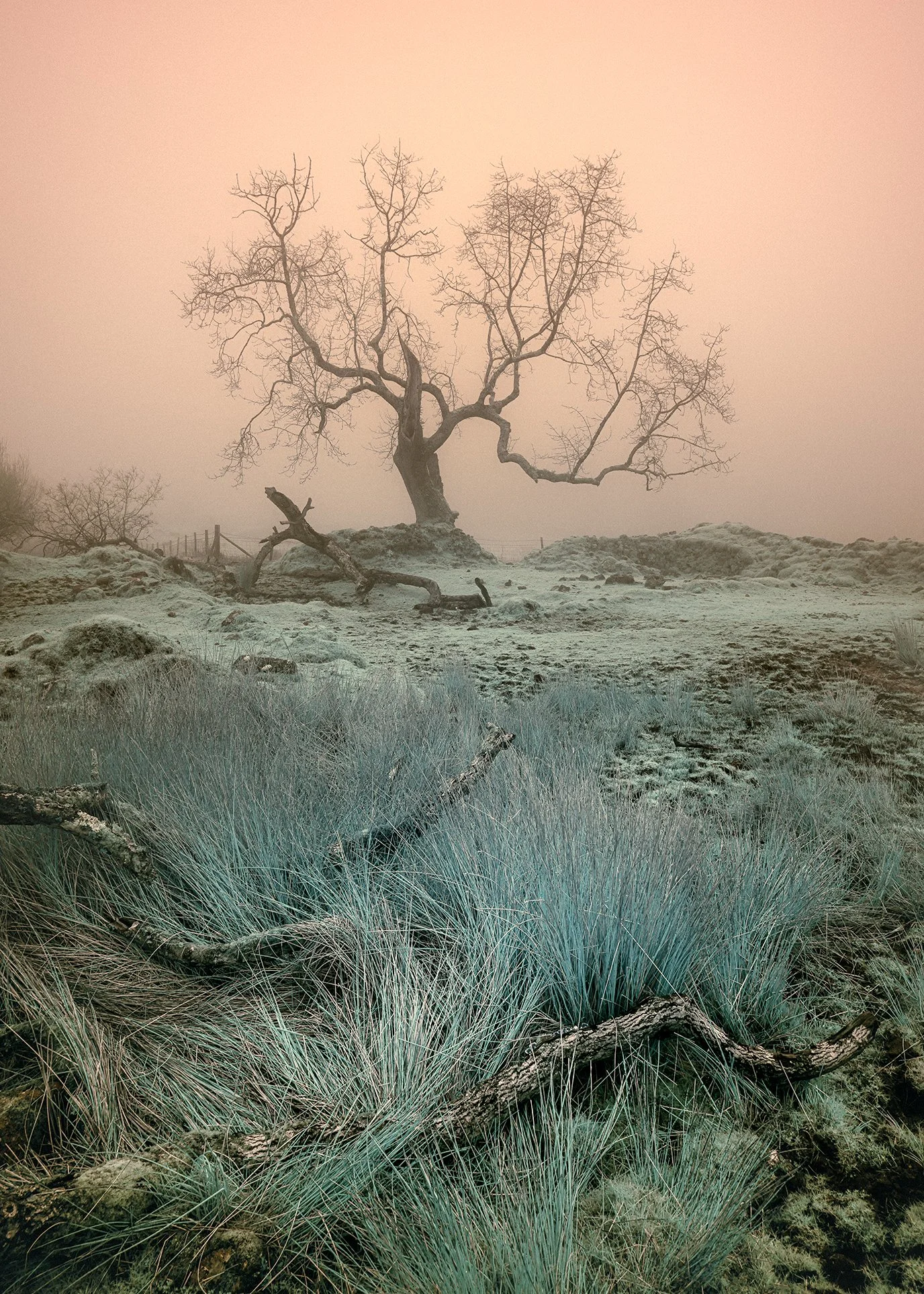
590nm Filter (no channel swap)
At the heart of serious IR photography is the full spectrum camera conversion. Most digital cameras come with an internal IR-cut filter that blocks infrared light to ensure accurate color reproduction in visible spectrum shots. A full spectrum conversion removes this filter, allowing the sensor to capture ultraviolet, visible, and infrared light all at once. This modification turns your camera into a versatile tool, but it requires external filters to isolate specific wavelengths for IR effects. I’ve had three conversions done professionally by Protech Photographic in the UK, and I can’t recommend them enough - their work is precise, reliable, and they’ve handled my gear with the utmost care. If you’re considering a conversion, use my discount code NEIL for 5% off at Protech Photographic. It’s a worthwhile investment that opens up endless possibilities without permanently altering your camera’s usability (you can always add a visible light filter to shoot normally).
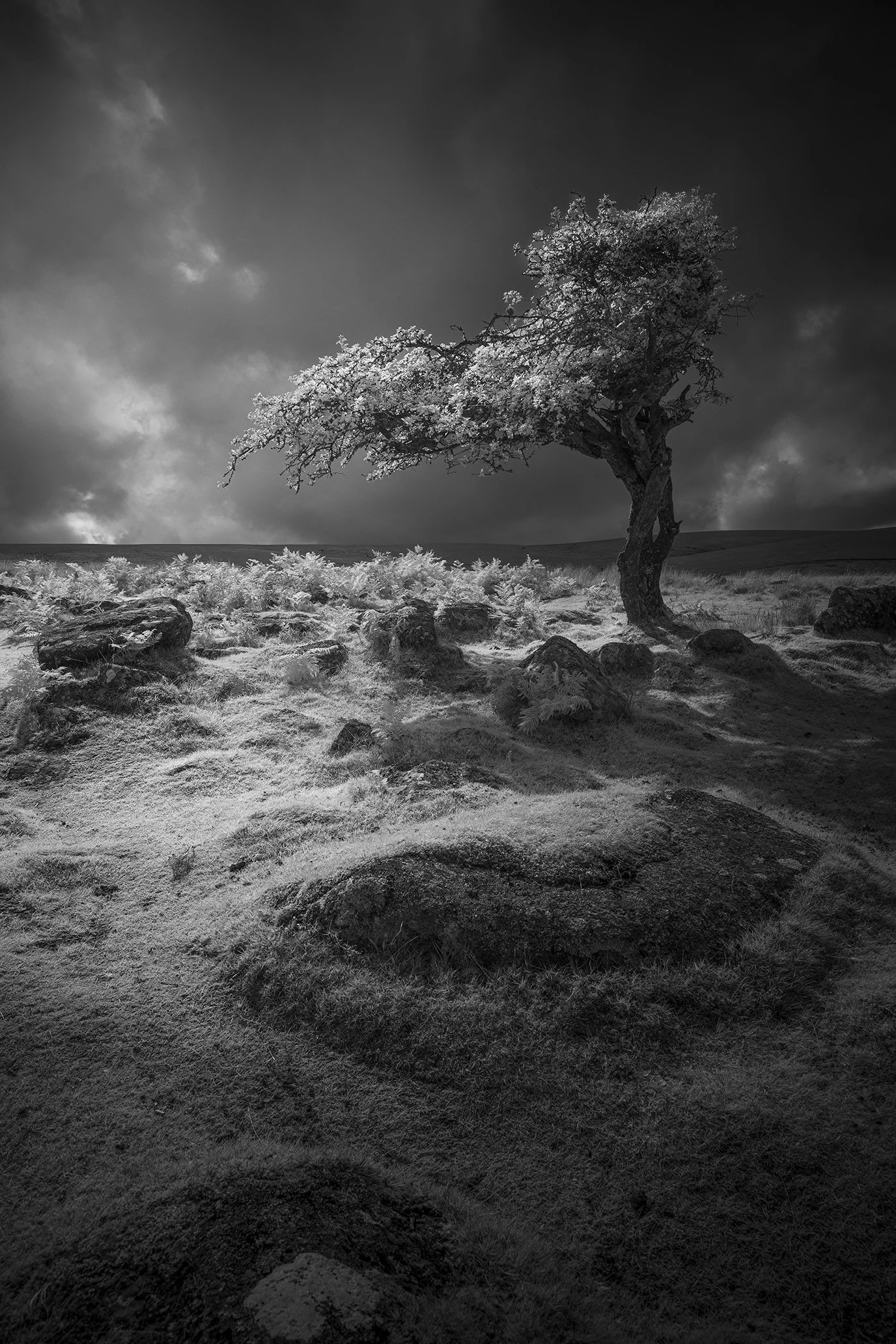
850nm Filter
Once your camera is converted, the real fun begins with wavelength-specific filters. A wide range of these filters, from standard to more exotic options, can be picked up quite cheaply on eBay - it’s a great way to experiment without breaking the bank. These screw-on or clip-in filters block visible light and allow only certain IR wavelengths through, each producing distinct looks:
590nm Filter: This is often called the “goldie” or “super color” filter because it lets in some visible red light along with IR, resulting in vibrant, colorful images with golden hues in foliage and blue skies that can turn cyan or purple after processing. It’s great for creative, painterly effects where you want a mix of colour and IR surrealism.
720nm Filter: The standard for classic IR photography, this cuts off most visible light, delivering high-contrast results that often lend themselves to black-and-white conversions (though you can add false color in post). Trees and grass appear bright white against dark skies, perfect for ethereal landscapes.
850nm Filter: This deeper IR filter produces stark, high-contrast black-and-white landscapes with glowing white foliage and deep, almost black skies and water - ideal for dramatic, moody scenes where the surreal “Wood Effect” of bright leaves against dark backgrounds really shines.
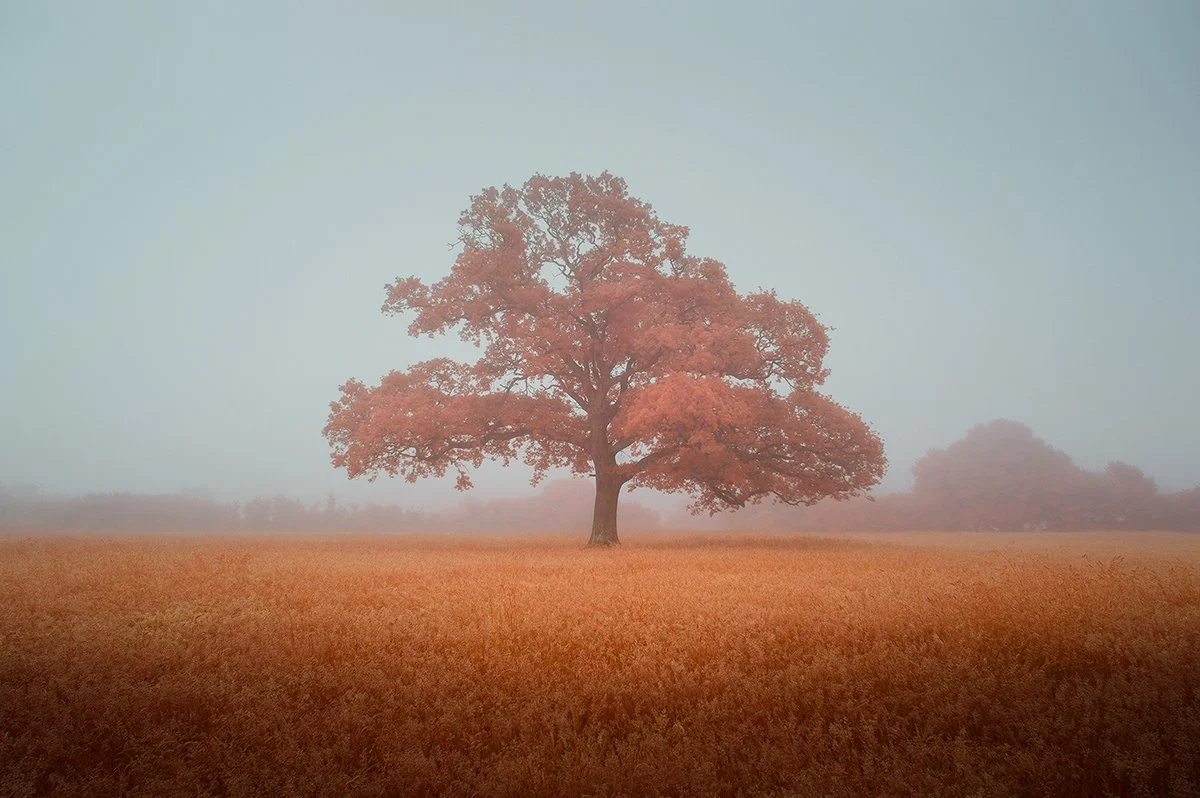
Aerochrome Filter
And then there’s the Aerochrome filter, inspired by Kodak’s discontinued Aerochrome film used for aerial surveillance. This filter simulates the film’s false-colour effect, turning greens to magenta or pink, blues to cyan, and creating a psychedelic, vibrant palette. For the best Aerochrome filters, I turn to Kolari Vision - they offer high-quality options that pair perfectly with full spectrum cameras for that retro-futuristic vibe.
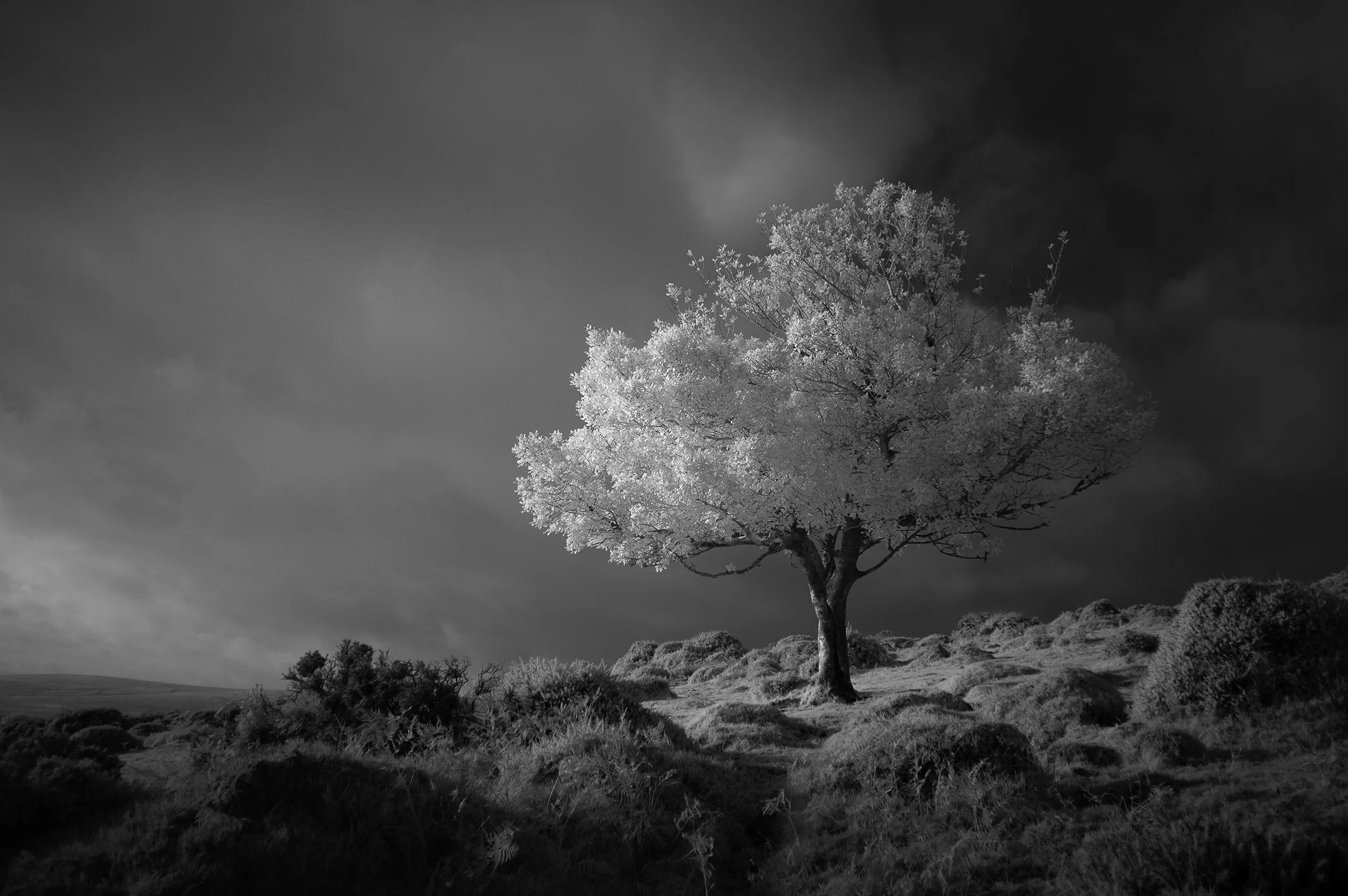
Fantasy - Winner of the B&W section in Landscape Photographer of the Year (850nm filter)
One important consideration when building your IR kit is lens compatibility. Some lenses suffer from “hotspots” - bright circles in the centre of the frame caused by internal reflections in IR light, especially when stopped down. To help avoid problematic lenses, check out the comprehensive Lens Hotspot Database from Kolari Vision, which is the world’s largest collection of tested lenses for IR performance.
I’ve been shooting with my full spectrum converted Nikon Z7 (converted back in 2021), and the results continue to inspire, capturing Dartmoor in ways that feel almost alien.
Looking ahead, I’m aiming to get my Hasselblad X1D II converted in the near future - its medium format sensor should take IR detail and dynamic range to another level, allowing for even larger prints with impeccable quality.
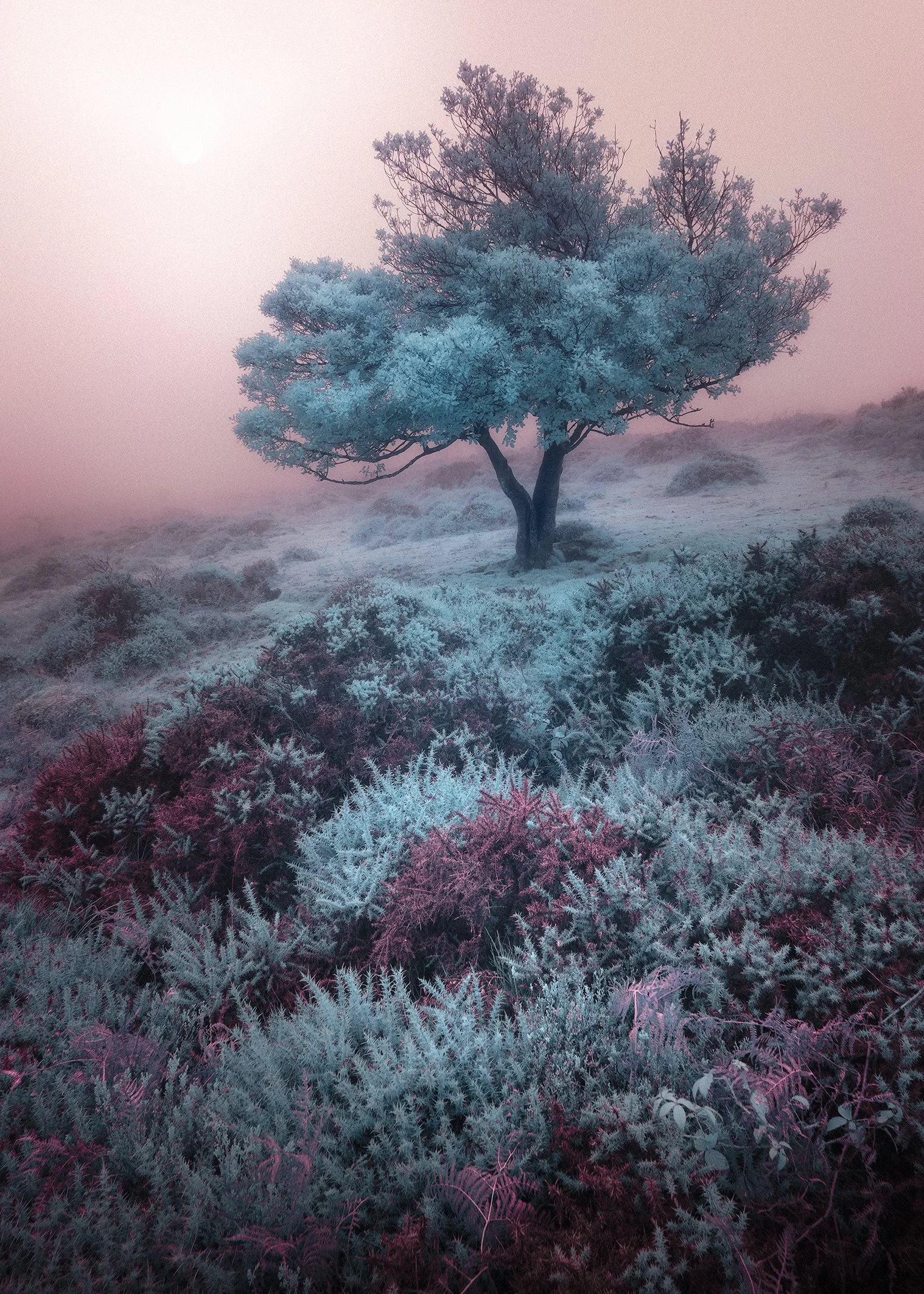
590nm Filter
Infrared photography isn’t just about the gear; it’s about embracing a new way of seeing. It adds layers to your creative process, from pre-visualizing how a scene will translate in IR to the excitement of post-processing channel swaps for false colors. A key part of this is setting a proper custom white balance or colour profile - especially for full spectrum setups - to get accurate starting points for your edits.
For inspiration, check out the stunning infrared work of Andy Lee, whose surreal landscapes (especially his Blue Iceland series) showcase the magic of IR, and Richard Mosse, known for his powerful use of Aerochrome-style false color in documentary projects like Infra.
Whether you’re using a 590nm for vibrant pops or an 850nm for stark black-and-white contrasts with glowing foliage, each filter unlocks unique storytelling potential.
If you’re intrigued, start with a conversion from Protech Photographic (don’t forget NEIL for 5% off) and pick up some affordable filters on eBay to experiment, or go for premium Aerochrome from Kolari Vision. The world looks different through IR - more magical, more mysterious - and it’s a creative journey I highly recommend.
